


 Copy Link
 Share
to X
Share
to X
 Share
to Facebook
Share
to Facebook
 Share
to LinkedIn
Share
to LinkedIn
 Share
on Email
Share
on Email
Have you played Nurture’s latest adventure with Care Bears? Not only does it tickle my nostalgia (I was always partial to Cheer Bear), it is a surprisingly entertaining way to learn some life skills, such as :
- Critical thinking
- Emotional regulation
- Creativity
- Empathy
- Self-esteem
To be fair, it was designed to do just that — but, as is often the case with games, there is also a whole host of unintentional learning moments. Beyond the core life skills, kids learn about healthy eating, safe skateboarding, and the importance of being yourself.
This month, I put my psychologist and parent hats on to check out this new collaboration.
The first thing I noticed in Badge Buddy is an engaging and thoughtful experience, perfectly suited for kids in their early school years (ages 4-7). The play is scaffolded (i.e., if you can’t find an object, it leads you in the right direction)and it is broken down into manageable blocks (i.e., chapters). The mechanics of each experience are somewhat similar, so as the player progresses, they start to master the skills that are expected of them.
Nurture is a kids’ app that develops Life Readiness skills such as creativity, curiosity, and critical thinking. All the more important in the age of AI, they're developed through fun, interactive, story-driven adventures. Nurture Academy — that’s where you are right now! — is for parents learning what it takes to raise smart, happy, and resilient kids in our increasingly digital world. We’re glad you’re here!
Read on, then discover how Nurture works or get the app.
What Makes Video Games So Great for Teaching Life Skills to Kids?
When I play video games, especially those designed for and marketed to children, I like to evaluate them on a few different levels:
- How is feedback delivered?
- How do they handle a player making mistakes?
- Are players rushed to achieve or allowed to explore?
- Are lessons delivered through play or performance (or both)?
- Are they fun?
The sweet spot is when feedback is helpful, mistakes are part of the journey (as with life!), curiosity is encouraged, learning is happening through interaction (not just instruction), and it is fun (though fun is arguably the most important part!).
When kids are supported to try things out in safe, supportive, fail-friendly environments (something games are great at doing!) and not being told what to do, they have the opportunity to learn and discover things on their own and build those new neural connections in fun, memorable ways.
Nurture adventures are designed to sit right in this sweet spot (and the Care Bears level is no exception!) because they understand young children are at a perfect developmental age to internalize the lessons they are learning through play - whether that be about critical thinking, emotion regulation, self-esteem, and everything in between.
Let’s dig into some of the more specific things you and your little one will find in Badge Buddy.
Critical Thinking with the Care Bears: Trying, Remembering, Adapting
Critical thinking is the ability to observe what’s happening, test ideas, remember what worked before, and apply that knowledge to new situations.
In Badge Buddy, kids practice this constantly without being explicitly taught. As Jojo explores the Silver Lining, players search for tools, experiment with matching and placement, and adjust their approach when something doesn’t work the first time.
What stood out to me while playing is how often the game quietly asks kids to think back:
- What did you try already?
- What did not work last time?
- What worked last time?
That kind of gentle prompting builds early problem-solving habits, cause-and-effect reasoning, and confidence in figuring things out independently — skills that support learning far beyond the screen.
Emotional Regulation: Keeping Care-Bear-Calm
Emotional regulation helps kids notice frustration, manage big feelings, and stay engaged when something feels challenging.
While playing Badge Buddy, I was struck by how calm the experience feels, even when progress slows. The game never rushes you, never scolds you, and never treats mistakes as failures.
Instead, characters respond with encouragement, the environment allows for pauses and resets, and kids are given space to try again when they’re ready. This kind of gentle pacing matters.
When children aren’t overwhelmed by pressure or urgency, they can focus on learning and persistence rather than managing stress. That’s a critical foundation for resilience at this age.
Creativity: Explore Possibilities without Pressure
Creativity is the ability to generate ideas, experiment with possibilities, and approach challenges in flexible, imaginative ways. It builds a mindset that’s foundational for problem-solving, storytelling, and learning across subjects.
In this level, creativity shows up less as “making something” (check out the Crayola adventure, though!) and more as how kids solve problems. As Jojo explores the Silver Lining, players are encouraged to try different approaches, interact with the world out of curiosity, and discover playful responses to their actions.
While playing, what stood out to me was how often the game rewards exploration and experimentation over speed or accuracy. That kind of open-ended design supports creative thinking by letting kids ask, “What happens if I try this?”
Empathy & Social Awareness: Learning Through Helping Others
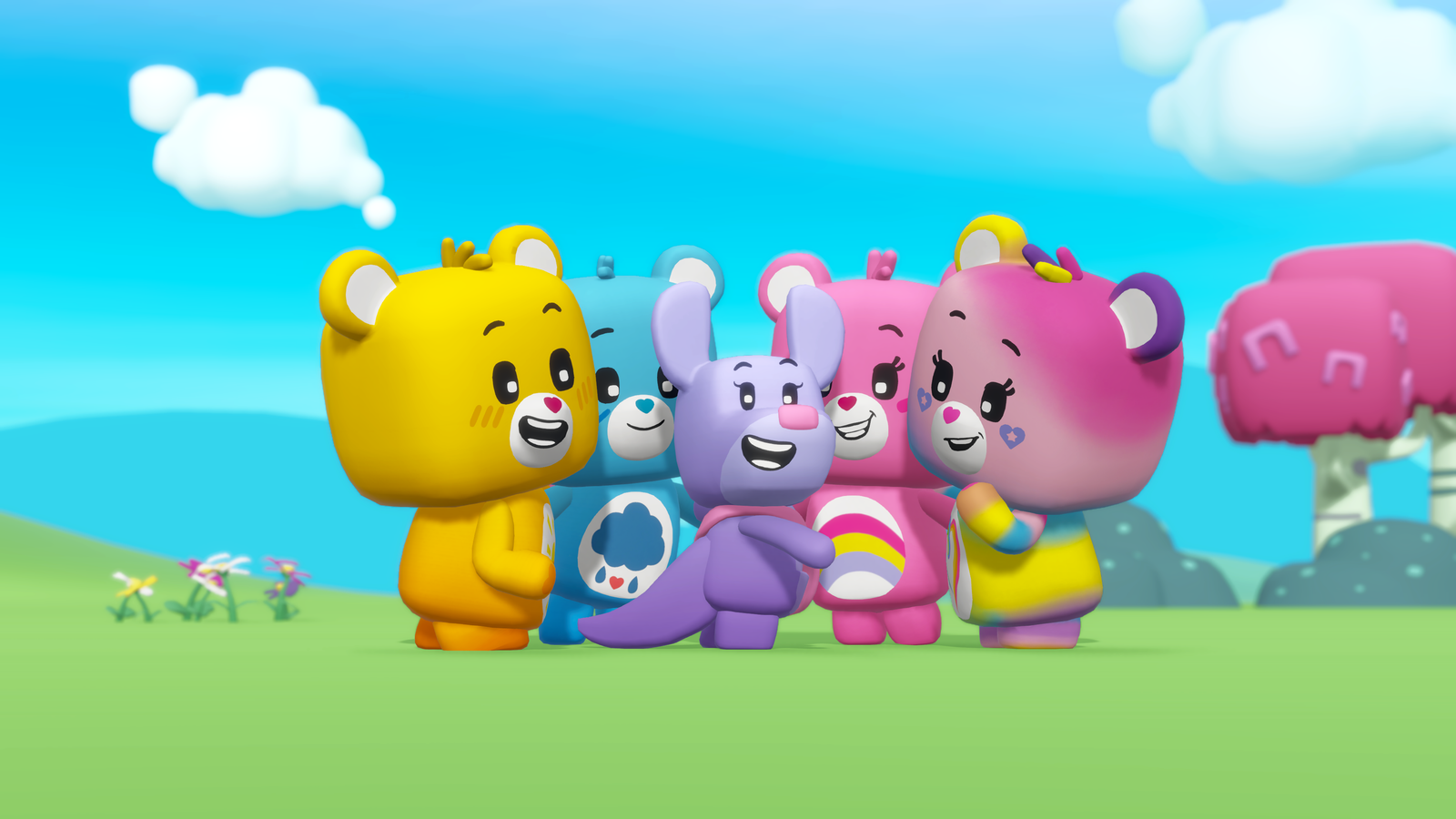
Empathy and social awareness help kids recognize how others feel, appreciate different perspectives, and respond with kindness and cooperation.
One of the strongest elements of Badge Buddy is how clearly each Care Bear’s unique strength is presented, and how progress depends on noticing and supporting those differences. Jojo doesn’t succeed by acting alone. She succeeds by helping others regain their powers and celebrating what makes each Bear special.
Through these interactions, kids practice perspective-taking, cooperation, and early ethical thinking in ways that feel natural and story-driven, not instructional. Empathy is something kids learn best through experiences like these, on or off-screen.
Confidence & Self-Esteem: Discovering “I Can Do This”
Confidence and self-esteem grow when kids experience effort, encouragement, and meaningful success.
What I appreciated most in Badge Buddy is that confidence doesn’t appear instantly, it builds over time. Jojo begins unsure of herself, and through helping others, trying new things, and sticking with challenges, she discovers that curiosity is her strength.
The final Buddy Badge ceremony doesn’t celebrate perfection. Instead, it celebrates growth, effort, and individuality. You don’t have to get everything right to be capable and confident.
Intentional Game Design in Badge Buddy
Not all screen time is created equal, as I’ve said many times throughout my work. Badge Buddy is a great example of why design matters. While playing, it’s clear that learning happens incidentally: kids are focused on helping characters and exploring the world, not on being taught lessons.
The experience offers psychological safety, gentle feedback, and opportunities to reflect and try again, all of which support deeper learning. When digital play is designed like this, it becomes a space where kids can practice real-world skills in ways that feel joyful, low-pressure, and developmentally appropriate.
A Parent, Psychologist, and Gamer’s Perspective
When games allow children to move at their own pace, encourage reflection, and make room for conversation and co-play (seriously, give this one a run yourself, too), digital play can become a meaningful part of a child’s learning environment.
I really enjoy playing Badge Buddy because:
- It honors kids’ emotional and cognitive rhythms
- Encourages curiosity over compliance
- Treats mistakes as part of learning
- Gave players the space to fail and then help them succeed .
- Helps build life skills through play rather than pressure
Watching how your child engages with experiences like this, and using those observations to guide future choices, can help parents feel more confident about the role digital experiences can play in their kids’ lives.


