


 Copy Link
 Share
to X
Share
to X
 Share
to Facebook
Share
to Facebook
 Share
to LinkedIn
Share
to LinkedIn
 Share
on Email
Share
on Email
Cognitive flexibility, or flexible thinking, falls in the realm of executive functions somewhere between creativity and critical thinking. Like both of those skills, it’s something our kids are born with, to a certain and unique degree, but it is more so a learned, developed, and expanded capability.
While we are all born with some level of innate ability to be flexible in our thinking, cognitive flexibility is certainly a skill to be practiced and honed. Put simply, flexible thinking is the ability to take on new or different ways of thinking. It helps us:
- Deal with uncertainty
- Solve problems
- Adjust to changes
- Incorporate new information
As I break down flexible thinking a bit further, and explain how it translates into mental well-being and emotional management foundations, the benefits of nurturing this skill will become even clearer.
Nurture is a kids’ app that develops Life Readiness skills such as creativity, curiosity, and critical thinking. All the more important in the age of AI, they're developed through fun, interactive, story-driven adventures. Nurture Academy — that’s where you are right now! — is for parents learning what it takes to raise smart, happy, and resilient kids in our increasingly digital world. We’re glad you’re here!
Read on, then discover how Nurture works or get the app.
What is Flexible Thinking (Cognitive Flexibility)?
To clarify, flexible thinking, sometimes called cognitive flexibility or mental flexibility, is the ability to think about things in new and different ways. It sounds simple, but it’s a big developmental shift for kids as they embrace adaptation to uncertainty, change, and new information.
The opposite of flexible thinking is rigid thinking. Without those capabilities, kids face emotional meltdown and an inability to self-regulate when something in their experience changes, especially when it's unexpected. Yet this rigidity is just part of the developmental spectrum, something to learn from.
Flexible thinking is the ability to question and flex those assumptions and habits, especially when a first or established approach doesn’t work. It’s about responding creatively, with an open mind, rather than being stuck in automatic reactions and resistance. Cognitive flexibility grows as kids are exposed to new ideas, have opportunities to experiment as they play, and are given the chance to challenge their existing patterns of thought. Flexible thinkers are less likely to get stuck in all-or-nothing thinking and more likely to find alternative solutions, which supports resilience and long-term happiness.
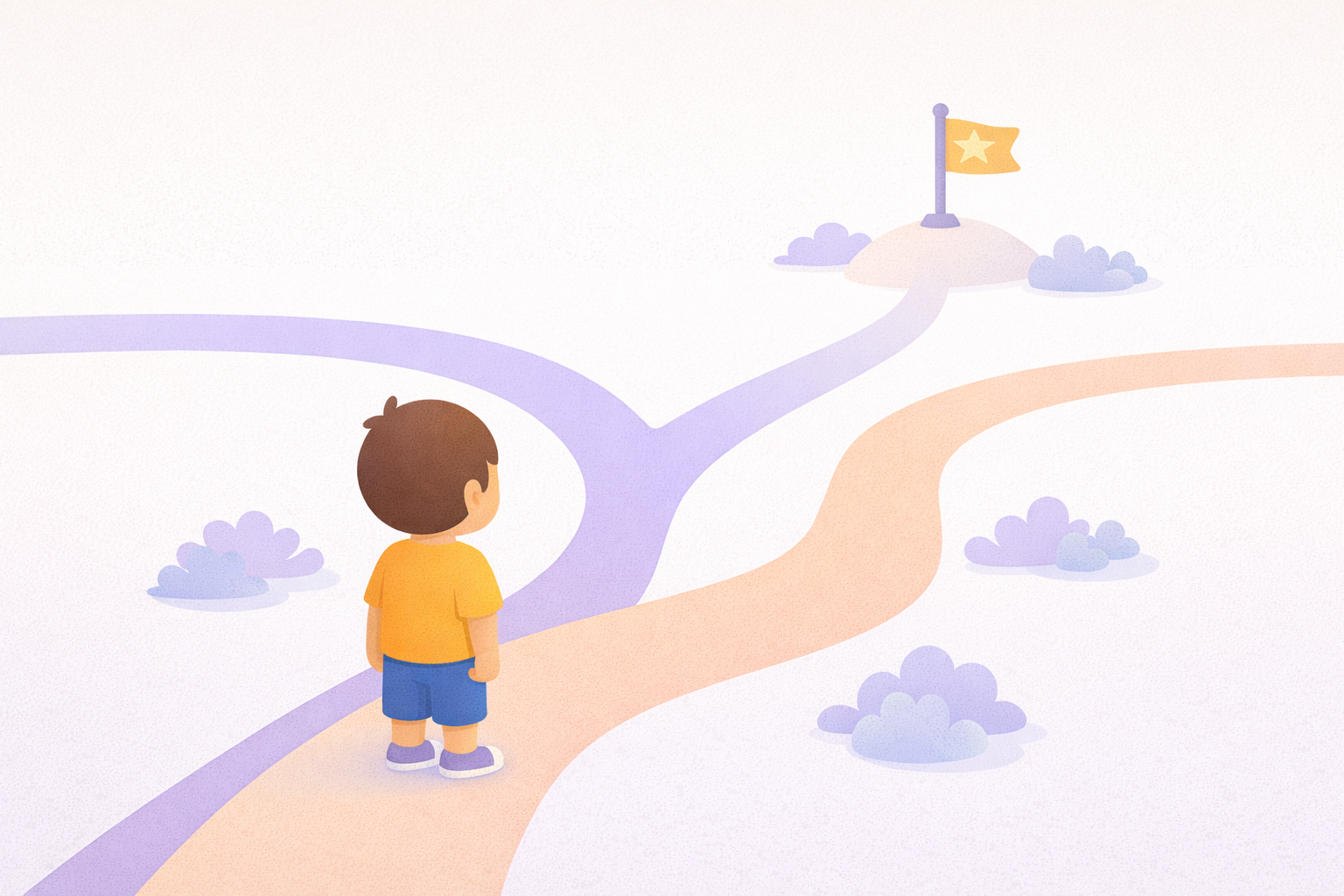
This life skill also has a direct link to happiness and psychological well-being (though it’s not to be confused with emotional regulation). Cognitive flexibility is more about how we approach and react to challenges, rather than how we manage the emotions associated with them. It’s supportive of a growth mindset, in which we take the mental perspective that every challenge and change is an opportunity for growth, not merely a setback or hurdle.
How Flexible Thinking Shows Up in Kids
Around ages 4-7, when young kids are heading to school and facing new scenarios, people, and environments, the opportunity is ripe to test and exercise their flexible thinking. They’re in a prime state of development in which critical foundations, like cognitive flexibility, are taking hold and can impact how they experience the rest of their childhood and the kind of adult they grow into.
While rigid thinking appears when kids expect things to stay the same, flexible thinking appears when they begin to tolerate, work with, and even embrace alternatives. They’re still learning the world, and they see things happening a certain way, so they naturally want things to stay that certain way.
They might want the same toy, movie, book, song, or bedtime routine. When things in their life that are typically reliable and constant start to — or suddenly — change, they’re going to struggle with that until cognitive flexibility takes deeper hold.
How kids react when they learn a new rule during a game, or even how they transition between activities, is all related to their level of cognitive flexibility. As it develops, they’ll understand there’s more than one way to get to the same goal. That’s the crux of it: finding new solutions.
Notice how they react when another kid wants to play with their favorite toy. They can take turns or find a way to play together, but how smoothly it happens depends on the cognitive flexibility of both kids. Compromise, turn-taking, sharing goals — that’s also part of flexible thinking. We have to give them chances to experience those uncomfortable moments, so they can grow into that ability to consider options and find new paths forward.
When they consider choices, get involved in decision-making, and forge a new path, they flex their cognitive flexibility. Caregivers can prompt this with phrases that encourage them to come up with their own ideas, like:
- “What else could we try?”
- “What do you think we should do?”
- “Is there another way?”
It’s going to be a bit messy as it develops, but allowing those opportunities to develop flexible thinking is crucial for the skill to strengthen and support them as they grow.
Flexible Thinking Is a Foundational Life Skill
But why is cognitive flexibility so important as they grow? Because it supports resilience through adaptation. It’s not about emotional control — although that’s complementary and also developing — but about standing up to challenges with curiosity, excitement, and calm, not seeing them as calamities.
Research suggests that cognitive flexibility supports emotional well-being indirectly. While it doesn’t connect to their own emotional regulation, it does help them make sense of emotional situations. Children with stronger cognitive flexibility are better able to:
- Adapt to changing circumstances
- Recognize that the same situation can lead to different feelings
- Avoid getting stuck in rigid interpretations
All of this supports healthier coping over time. While cognitive flexibility is not the same as empathy or emotional regulation, it is important as a cognitive foundation that helps children understand emotional information. That, in turn, makes it easier for other emotional skills to develop.
Additional research positions cognitive flexibility as a “mediating” tool for emotional and psychological well-being. It reinforces that cognitive flexibility is closely linked to children’s emotional well-being through coping and adaptation, not through direct emotion control.
The study found that children with higher cognitive flexibility were better able to:
- Manage stress
- Adjust to challenges
- Use more effective coping strategies, which support overall psychological well-being.
Flexible thinking helps children adapt their responses and problem-solve under stress, creating conditions where emotional skills can function more effectively.
When big reactions to change or challenge do occur, it’s not a failure, but more of an opportunity for caregivers to scaffold that cognitive flexibility development and encourage creative problem-solving — and confidence in their ability to make it through.
Resistance to Change = Opportunities for Growth
The eternal struggle of anyone who has cared for kids: figuring out how to transform resistance to change into opportunities for growth. As with many skills that fall into the “life preparedness gap,” caregiver scaffolding is important for developing cognitive flexibility, especially as routines, expectations, and social demands often shift throughout early childhood.
The good news is that this gives plenty of space for real-world practice. Some ways we can help foster cognitive flexibility are by:
- Validating emotions (and helping them work through them)
- Modeling flexibility (setting the example when uncertain, new, or changing moments arise)
- Involving kids in decision-making (when faced with a new scenario, give them a chance to lead)
We must also remember that being flexible in our thinking is not something that comes with an on/off switch. What parents often confuse with defiance and stubbornness is, in fact, just the not-yet-honed ability to think flexibly. Some common behavioral challenges our kids struggle with may stem from underdeveloped flexibility in their thinking.
Some kids might rely heavily on routines, especially the more anxious ones, and that might come off as rigid. Their resistance to change isn’t an outright refusal, it’s just that they don’t yet have the ability to see, understand, and decide on alternative paths.
When you consider flexible thinking from that perspective, it’s easy to see how video games can be a perfect way to help kids develop their cognitive flexibility. Most games require the player to overcome challenges, try new approaches, and navigate continuously changing environments.
Look at the classic Mario example: as our favorite plumber explores his world, there is a constant stream of new tools, environments, and foes that require you to figure out the right combination of actions. There’s a built-in trial-and-error mechanism that rewards observation and new approaches.
Developing flexible thinking is more about practice than about instruction. That’s what makes video games so great, as well — endless opportunities to try, fail, and try again. Cognitive flexibility is just one of the many skills kids are unintentionally learning as they have fun.
The more opportunities kids have to practice flexible thinking, the better they’ll be at it. That brings me back to Mario.
Can Video Games Help Build Flexible Thinking?
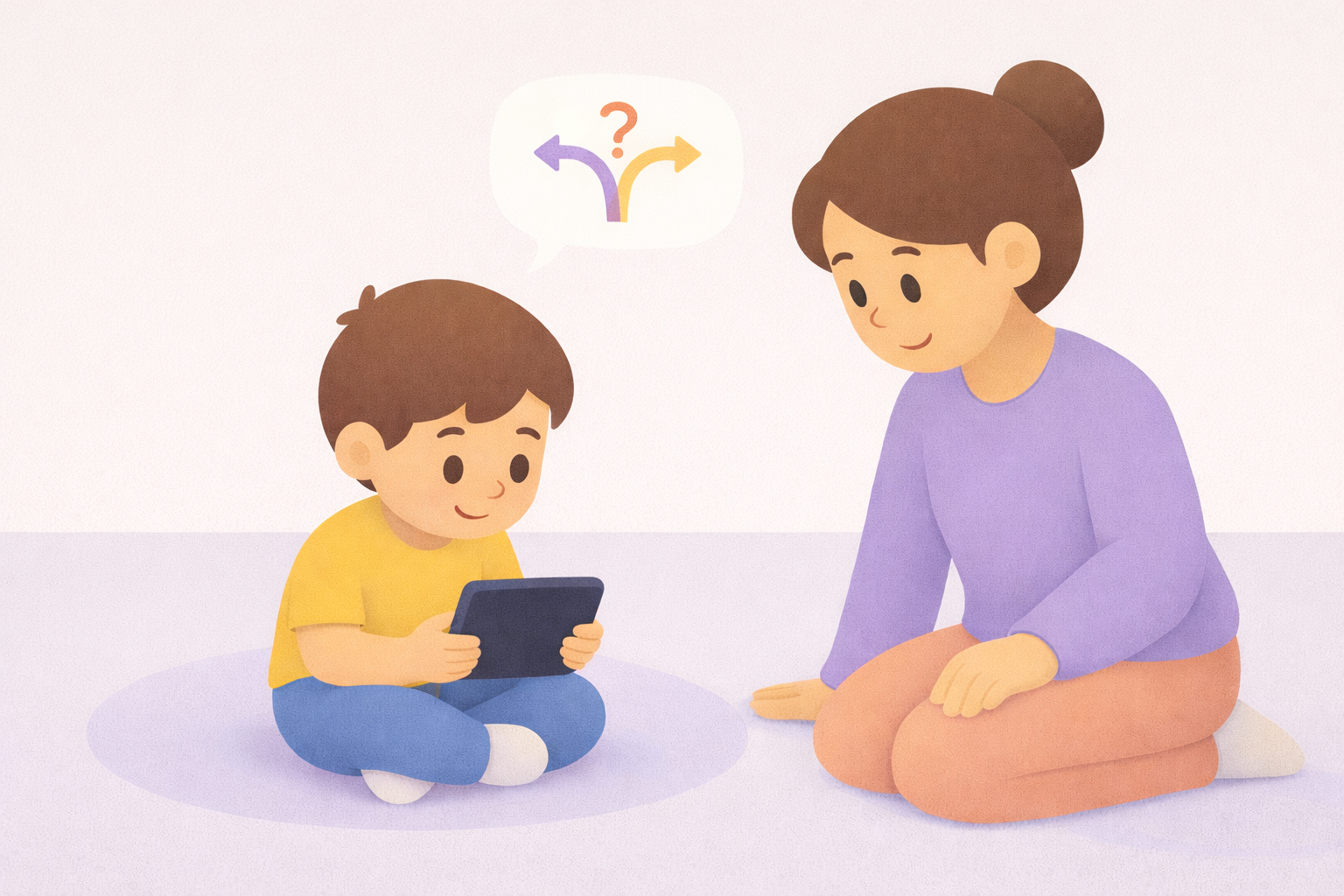
Mario games can be a great example, because they’re actually chock full of familiarity and routine — the characters, levels, challenges, and villains — but as soon as you get too comfortable and let your guard down, a surprise can mean game over.
But then, you get to try again!
I use the classic example, but really, most games require us to first understand how the gameplay and environments work, then react to and overcome new challenges and try new approaches. They all require adaptation. Flexible thinking in action, in real time, under “safe” stress.
Video games provide that space to try again and again, and they make it fun. Kids can be more willing to experiment, adapt, and adjust, exercising those elements of flexible thinking in a more comfortable environment.
The Value of Co-Play and Modeling
As is the case with many life skills, modeling these skills is critically important to kids’ development. Video games give another perfect opportunity to put it in clear focus when we co-play with our kids.
When you pick up the controller, and you fail, struggle, or get stumped, they can see you smile, get creative, laugh it off, and even ask for help. They pick up on that resilience, persistence, and flexible thinking. They see how it’s done, and they can then practice it more easily, with more confidence and wherewithal.
Games like It Takes Two and Split Fiction are great choices because they actually require cooperation. You have to be not only flexible in your thinking about the game, but also about your co-player, too. That combo of navigating the puzzle and the social dynamics adds an extra player of cognitive flexibility to the practice.
Flexible Thinking Is Practiced, Not Preached
Flexible thinking doesn’t develop because kids are told to “be flexible.” It grows through repeated, low-stakes practice: moments where kids can try something, hit a roadblock, and find another way forward.
That’s where tools like games can help. Not as shortcuts or guarantees, but as environments that naturally invite experimentation, adaptation, and persistence. The goal isn’t perfect flexibility or calm reactions every time. It’s progressive adaptability. Getting a little better at adjusting when things don’t go as planned.
For caregivers, that means shifting the focus from how fast kids succeed to how they respond when things change. The pauses, pivots, and “let me try again” moments are where flexible thinking actually takes shape. Flexible thinking is built through practice, not pressure, and play gives kids countless chances to try again.
FAQs: Flexible Thinking (Cognitive Flexibility) for Kids
What is flexible thinking in kids, in simple terms?
Flexible thinking is a child’s ability to try new ideas, adjust when plans change, and see more than one way to solve a problem. For example, if a game doesn’t work the first time, a flexible thinker is more likely to try a different approach instead of giving up.
What’s the difference between flexible and rigid thinking?
Flexible thinking means adapting to change; rigid thinking means feeling stuck when things don’t go as expected. Rigid thinking isn’t a flaw or label — it’s often just a sign that the skill of flexibility is still developing.
Can video games actually improve cognitive flexibility?
Research suggests that games can support flexible thinking when they require adaptation, problem-solving, and trial-and-error. Design and context matter — games that invite experimentation and reflection offer more flexibility practice than those that rely on rote repetition alone.
How can parents help kids with rigid thinking at home?
Caregivers can model flexibility, offer choices, and use open-ended language like “What else could we try?” Low-pressure practice, rather than correction, helps kids build flexibility over time.
Are some kids naturally less flexible than others?
Yes — temperament plays a role. Some kids thrive on routine and predictability, while others adapt more easily. But cognitive flexibility is a skill, and with support and practice, all kids can strengthen it.


