


 Copy Link
 Share
to X
Share
to X
 Share
to Facebook
Share
to Facebook
 Share
to LinkedIn
Share
to LinkedIn
 Share
on Email
Share
on Email
Most parents have a version of “The Talk” with their kids. Don't get in a car with a stranger. Don't open the door if you're home alone. Scream if someone grabs you.
But there's a version of that conversation we don't have nearly as often, and it might be the more useful one: Who would your child call if something happened online that made them feel scared, confused, or uncomfortable?
Do they know the answer? Have you practiced it together?
That's what the concept of a trusted adult is really about, and it matters a lot more than most parents realize, especially for kids ages 4 to 7 who are starting to use apps, games, and video calls independently for the first time.
What Is a Trusted Adult?
A trusted adult is any grown-up that a child can turn to for help, comfort, or guidance. Someone whose words and actions make the child feel safe.
That's it. It doesn't have to be a parent. Research from organizations like the National Alliance on Mental Illness (NAMI) shows that kids often choose trusted adults from their broader network: a grandparent, an aunt, a favorite teacher, a coach, a family friend. What matters is that the child feels genuinely safe with that person and knows that person will listen without judgment.
For young children, a trusted adult is less about a formal concept and more about a felt sense: that's the person I go to when something feels wrong.
The goal is to make sure your child has at least two or three people who fit that description, not just one, and knows exactly who they are before they ever need them.
Why It Matters Online
We spend a lot of energy teaching kids not to talk to strangers in physical spaces. But the digital world introduces a new dimension: online, strangers can disguise themselves. They can look like other kids, sound friendly, and seem completely harmless.
For a 5-year-old who's playing a game and a friendly character appears in the chat, the instinct to respond isn't suspicious — it's social. Kids at this age are wired to connect.
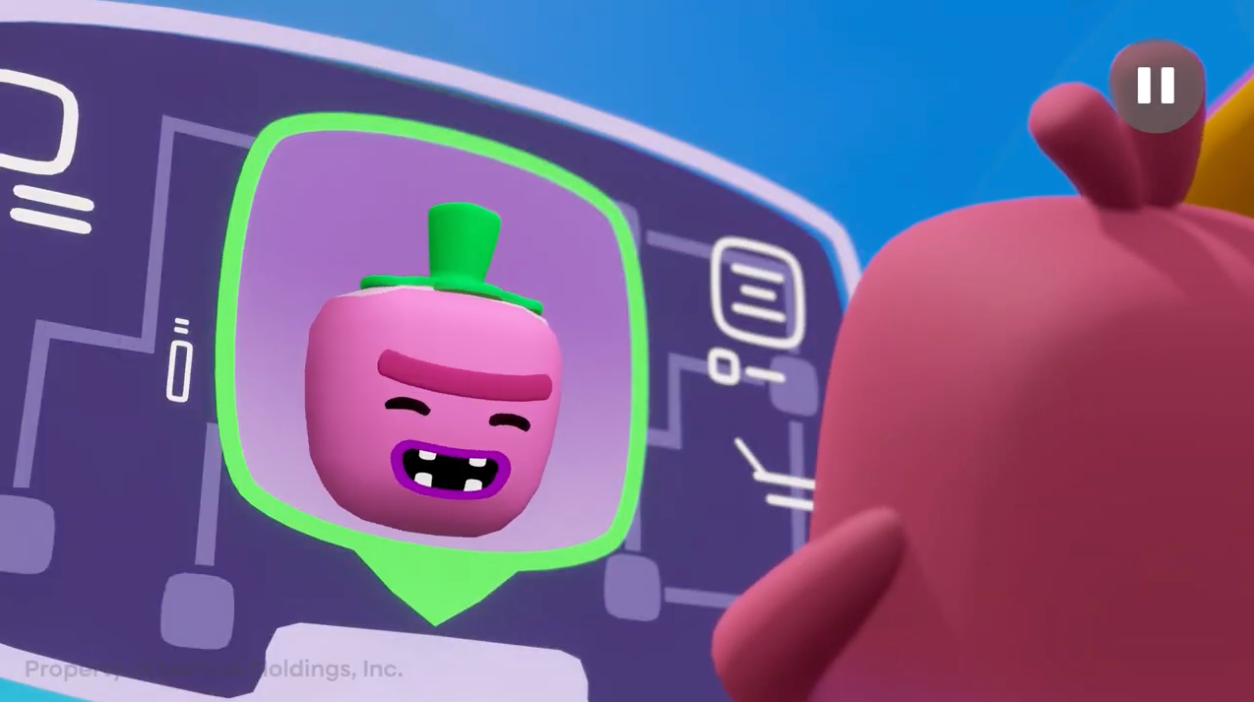
Knowing who a trusted adult is matters most when a child actually needs one. Nurture's Tomato Imposter adventure gives children ages 4–7 the experience of building a family chat list and calling for help through a story they'll want to play again.
That's why the "don't talk to strangers" rule alone isn't enough. What kids also need is the flip side: when something feels off, tell a trusted adult immediately. Not later. Not after they've tried to figure it out themselves. Right away.
This is one of the core lessons in Nurture's DD403 adventure, where the character Boing models exactly this skill. When the crew faces a problem they can't solve, Boing's first move isn't to panic or keep it secret. She opens the family chat and calls someone she trusts. Watching a character practice that behavior, in a story kids are genuinely engaged with, makes the skill real and memorable in a way that a single conversation rarely does.
How to Build Your Child's Trusted Adult List
The most practical thing you can do today is sit down with your child and build what we call a family chat list — the short list of grown-ups your child knows they can call on.
Here's how to approach it:
Keep it concrete, not abstract. Don't just say "you can always come to me." Name specific people together: "If you're at Grandma's and something happens, who would you go to?" "If I'm not around and you see something online that scares you, who could you tell?"
Aim for at least three people. One person can't always be available. A child who only has one trusted adult may hesitate if that person isn't reachable. Three is a practical, manageable number for young kids to hold onto.
Include people outside the immediate family. Sometimes kids want to tell someone other than a parent, and that's healthy. A teacher, an aunt, or a neighbor they know well all count. Encouraging this doesn't undermine your relationship; it strengthens your child's safety net.
Practice it. Role-play a scenario together. "Let's pretend something on your tablet made you feel weird. Who would you tell?" "What would you say?" The more a child has rehearsed this mentally, the easier it is to actually do it when the moment arrives.
For younger children (4 to 5), keep the list simple: two or three faces they know and love. For kids closer to 7, you can start adding context: what kinds of things to bring to a trusted adult, including things they see online that feel strange or uncomfortable.
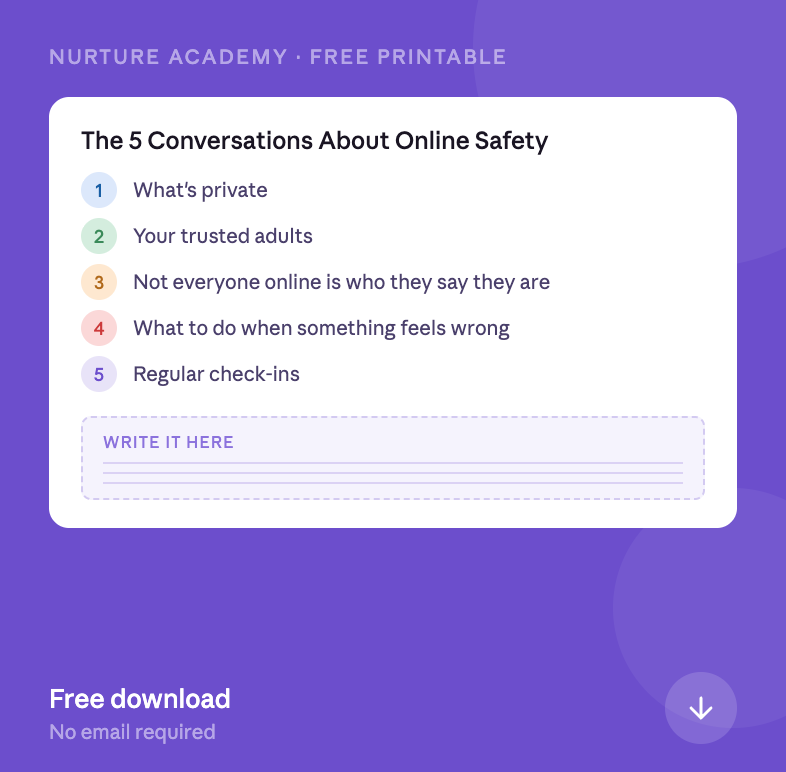
Free printable: The 5 Conversations About Online Safety Five age-adapted scripts (one for each conversation), a printable trusted adult list your child can fill in, and a quick reference for regular check-in questions. One page.
What Makes Someone a Good Trusted Adult?
Kids naturally choose trusted adults based on feeling, not logic. Research consistently shows that the adults young people turn to are the ones who listen without jumping straight to a lecture, who don't overreact, and who make children feel genuinely heard rather than immediately managed.
That's worth holding onto as a parent. One of the best things you can do is build the kind of relationship where your child's first instinct, when something goes wrong, is to come to you not to hide it.
A few things that research (and common sense) suggest help:
- Stay calm when they bring you hard things. If a child's disclosure is met with alarm or anger, they learn to filter what they share next time.
- Believe them. Even if the thing they're describing seems minor to you, take it seriously. Dismissing a small worry teaches them not to bring the big ones.
- Follow through. If you say you'll help, help. Consistency is what turns a relationship into a trusted one.
These same principles apply for communication skills more broadly. Active listening and non-reactive responses are the building blocks of the kind of relationship where kids actually talk to you.
Connecting It to Online Safety
Trusted adults are one piece of the larger puzzle of digital citizenship: the set of skills that help kids navigate digital spaces safely, responsibly, and confidently.
The others: knowing what information to keep private, recognizing when something online seems off, and understanding that not everyone online is who they say they are. For practical guidance on all of these, see our full guide to internet safety tips for kids and our article on online stranger danger specifically for young children.
These skills work together. A child who knows their trusted adults, understands basic privacy rules, and has practiced what to do in a tricky online situation is genuinely prepared. Not scared, prepared.
That's the goal. Not fear, but readiness.
FAQ
What is a trusted adult for kids?
A trusted adult is any grown-up a child feels safe turning to for help: someone who listens without judgment and takes the child's concerns seriously. This can be a parent, grandparent, teacher, coach, or other close family friend. The key is that the child feels genuinely safe and knows the person will respond with care.
How many trusted adults should a child have?
Experts recommend that children identify at least two to three trusted adults, not just one. Having more than one means a child always has someone available to turn to, even if their first choice isn't reachable.
How do I help my child identify their trusted adults?
Sit down together and name specific people — don't keep it abstract. Ask questions like "If something scared you online and I wasn't around, who would you call?" Aim for a short list of two to three people your child knows and loves. Practice what your child would say by role-playing simple scenarios together.
What should a trusted adult do when a child comes to them with a concern?
Listen without immediately reacting. Believe the child. Ask open questions rather than jumping to conclusions. Follow through on any promise to help. The most important thing a trusted adult can do is make the child feel heard — that's what keeps the door open for future conversations.
Why do kids need a trusted adult specifically for online situations?
Online spaces introduce risks that are harder for young children to recognize, including strangers who appear friendly, content that feels confusing, and requests for personal information. Having a designated trusted adult means a child knows exactly who to tell, and when, if something online feels wrong. It turns an abstract safety concept into a concrete action plan.


